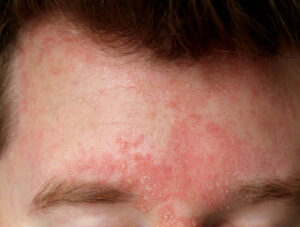
Seborrheic dermatitis is a common inflammatory skin condition that causes flaky, scaly, itchy, or irritated skin. It most often affects oil-prone areas such as the scalp, face, ears, eyebrows, beard area, and chest.
Although its appearance can be frustrating, seborrheic dermatitis is not caused by poor hygiene—and it is not contagious. With the right treatment and skin care, symptoms and flare-ups can usually be controlled.
What Does Seborrheic Dermatitis Look Like?
Seborrheic dermatitis can appear differently depending on your skin tone and the area affected. Common signs include:
- White or yellow, dry or greasy flakes
- Scaly or crusty patches
- Itching or irritation
- Swollen or inflamed skin
- Red or pink patches on lighter skin tones
- Pink, purple, lighter, or darker patches on deeper skin tones
On the scalp, a mild form may look like dandruff. Seborrheic dermatitis can also develop around the nose, behind or inside the ears, along the eyebrows and hairline, in facial hair, or on the upper chest.
Because it can resemble psoriasis, eczema, rosacea, or an allergic reaction, an examination by a dermatology provider is important for an accurate diagnosis.
What Causes Seborrheic Dermatitis?
The exact cause is not fully understood. The condition may be related to the skin’s inflammatory response to a yeast called Malassezia, which normally lives on the skin, along with oil production and individual susceptibility.
Common triggers may include:
- Cold or dry weather
- Stress
- Hormonal changes
- Illness or fatigue
- Certain skin or hair-care products
It is not caused by unclean skin and cannot be spread to another person.
Cradle Cap in Babies
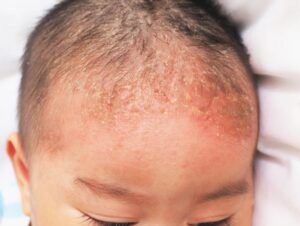
When seborrheic dermatitis develops in an infant, it is commonly called cradle cap. It usually causes greasy, scaly, or crusty patches on the scalp. Babies may also develop patches in skin folds, behind the ears, or in the diaper area.
Cradle cap is generally harmless and often clears on its own within a few weeks or months. Gentle washing with baby shampoo and carefully loosening softened scales may help. Do not use an adult dandruff shampoo or medicated product on a baby unless a healthcare professional recommends it.
Contact your child’s healthcare provider if the rash spreads, appears infected, causes significant discomfort, or does not improve.
Seborrheic Dermatitis in Teens and Adults
In adolescents and adults, seborrheic dermatitis may be a long-term condition. Symptoms often improve and then return, particularly during colder weather or periods of stress.
Although there is no permanent cure, treatment can:
- Reduce flakes and scaling
- Calm inflammation and discoloration
- Relieve itching
- Help prevent future flare-ups
- Lower the risk of infection caused by scratching
Some people need ongoing maintenance treatment to keep their symptoms under control.
How Is Seborrheic Dermatitis Diagnosed?
A dermatology provider can often diagnose seborrheic dermatitis by reviewing your symptoms and medical history and examining the affected skin.
In some cases, additional testing or a small skin biopsy may be recommended to rule out another condition, especially when the rash resembles psoriasis, eczema, a fungal infection, or an allergic reaction.
Seborrheic Dermatitis Treatment
Treatment depends on your age, symptoms, skin type, hair type, and where the condition appears. Your personalized treatment plan may include:
- Medicated or anti-dandruff shampoo
- Topical antifungal medication
- Short-term topical corticosteroid medication
- Other prescription creams, foams, gels, solutions, or ointments
- Gentle cleansers and moisturizers
- Maintenance treatment to reduce recurring flare-ups
Medicated shampoo may sometimes be recommended for areas beyond the scalp, such as the beard or chest. Follow your dermatology provider’s directions carefully, including how often to use a product and how long to leave it on the skin or scalp.
Using prescription treatments more frequently or for longer than directed can cause side effects.
When Should You See a Dermatology Provider?
Schedule an appointment if:
- Your symptoms are persistent or getting worse
- The itching interferes with sleep or daily activities
- Your skin becomes painful, swollen, or begins draining
- Over-the-counter dandruff products do not help
- The rash spreads beyond your scalp
- You are unsure whether the condition is seborrheic dermatitis, eczema, or psoriasis
Expert Seborrheic Dermatitis Care in Hampton Roads
You do not have to manage an itchy, flaky scalp or recurring facial rash on your own. The dermatology providers at Pariser Dermatology Specialists can diagnose the cause of your symptoms and create a treatment plan for your skin, scalp, and hair-care needs.
Pariser Dermatology serves patients throughout Hampton Roads and Coastal Virginia, with convenient locations in Chesapeake, Newport News, Norfolk, Suffolk, Virginia Beach, and Williamsburg.
Schedule an appointment today and take the first step toward calmer, healthier skin.
Frequently Asked Questions
Is seborrheic dermatitis contagious?
No. Seborrheic dermatitis cannot be passed from one person to another.
Is seborrheic dermatitis caused by poor hygiene?
No. It is an inflammatory skin condition and is not caused by being unclean.
Are dandruff and seborrheic dermatitis the same?
Dandruff is often considered a mild form of seborrheic dermatitis. Dandruff usually affects only the scalp and does not cause the same degree of inflammation. Seborrheic dermatitis can also affect the face, ears, beard area, chest, and other oil-prone areas.
Can seborrheic dermatitis be cured?
There is currently no permanent cure for seborrheic dermatitis in teens and adults. However, treatment can clear or significantly improve symptoms and help reduce flare-ups.
Does seborrheic dermatitis cause hair loss?
Seborrheic dermatitis does not usually cause permanent hair loss. Temporary shedding may occur when inflammation is severe or when frequent scratching damages the hair. A dermatology provider should evaluate ongoing or noticeable hair loss.
Can stress make seborrheic dermatitis worse?
Yes. Stress is a common trigger for seborrheic dermatitis flare-ups. Cold, dry weather may also worsen symptoms.
Outcome
Infant: Seborrheic dermatitis often completely disappears by 6 months to 1 year of age. It can return when the child reaches puberty.
Adolescent or adult: A few people see seborrheic dermatitis clear without treatment. More often, it lasts for years. It tends to clear and flare without warning. Treatment often is necessary to control it.
To schedule your appointment call us at 757-622-6315 or schedule an appointment online.