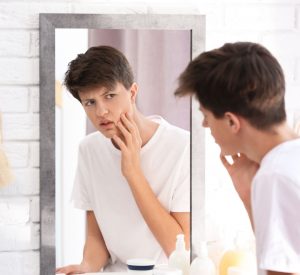
For patients in Hampton Roads who have tried everything for their acne and still struggle, Accutane (isotretinoin) is often the treatment that finally works. It is one of the most studied and effective medications in all of dermatology, and at Pariser Dermatology Specialists, our board-certified physicians have been guiding patients through isotretinoin therapy for decades. If you have heard conflicting things about this medication, we are here to give you the facts.
What Is Accutane?
Accutane was the original brand name for isotretinoin, a prescription oral medication derived from Vitamin A. The brand-name Accutane is no longer available, but the generic isotretinoin is widely prescribed today under names including Absorica, Amnesteem, Claravis, Myorisan, and Zenatane. In conversation, most patients and providers still refer to it simply as Accutane.
Isotretinoin was approved by the U.S. Food and Drug Administration in 1982 for the treatment of severe acne. It is a retinoid, meaning it belongs to the same family of compounds as topical tretinoin, but it works systemically and is significantly more powerful. For patients with severe nodular or cystic acne, or moderate acne that has not responded to other treatments, isotretinoin often provides long-term or permanent clearance when nothing else has worked.
How Does Accutane Work?
What makes isotretinoin uniquely effective is that it targets all four of the root causes of acne at once, something no other treatment can claim.
Most acne treatments address only one or two contributing factors. Topical retinoids improve cell turnover. Antibiotics reduce bacteria. Hormonal therapies regulate oil production. Isotretinoin does all of the following simultaneously:
- Shrinks sebaceous glands and dramatically reduces oil production, which is the primary driver of acne lesions
- Normalizes the process by which skin cells shed, preventing pores from becoming clogged
- Reduces the growth of Cutibacterium acnes (formerly P. acnes), the bacteria associated with inflammatory acne
- Exerts anti-inflammatory effects that calm redness and swelling
Because it addresses the underlying biology of acne from every angle, isotretinoin can produce results that other medications cannot, including clearance that persists long after the course of treatment is complete.
Who Is a Candidate for Accutane?
Isotretinoin is typically recommended for patients with severe nodular or cystic acne, the kind that produces large, painful, deep lesions and carries a high risk of scarring. It is also appropriate for patients with moderate acne that has failed to respond to oral antibiotics, topical medications, or other therapies after several months of consistent use.
It is worth noting that Accutane is not only for teenagers. Adult acne is far more common than many people realize, and adults of all ages can be appropriate candidates for isotretinoin when other treatments have not provided adequate relief. Our providers take a personalized approach to evaluate whether isotretinoin is the right choice for each individual patient, regardless of age.
In some cases, our dermatologists may recommend isotretinoin earlier in the treatment process, particularly when acne is causing significant scarring or emotional distress. For the right candidate, it is not necessary to exhaust every other option first.
What to Expect: Accutane Results Month by Month
Understanding the timeline of isotretinoin is important for managing expectations, particularly in the early weeks of treatment.
| Weeks 1 to 4 | Some patients experience an initial purge, a temporary worsening of breakouts as isotretinoin begins affecting the skin. This is normal and resolves on its own. |
| Weeks 6 to 8 | For most patients, this is when improvement becomes visible. Oil production decreases noticeably, and new lesions become less frequent. |
| Months 2 to 3 | “After usually 2 to 3 months, most patients will begin to see a dramatic decline in the number of nodules and deep cystic lesions.” (Dr. David Pariser, Senior Physician) |
| Months 4 to 5 | Most patients are near-clear or fully clear by the final stretch of treatment. Approximately 85% are virtually clear by 16 weeks. |
| After Treatment | 95% of patients see complete remission of severe acne within the first 6 months. Many maintain clearance for years, or permanently, after a single course. |
Treatment length typically ranges from 4.5 to 6 months, though this varies based on the individual and the dosing protocol used. Some patients require a second course, particularly for acne on the chest or back, which can be more resistant to treatment.
Low-Dose Isotretinoin
In some cases, dermatologists prescribe isotretinoin at a lower dose than the standard protocol. Low-dose isotretinoin may be appropriate for patients with milder or hormonal acne, those who are particularly sensitive to side effects, or as a long-term maintenance approach. If low-dose therapy might be suitable for your situation, our providers will discuss that option during your consultation.
Accutane Side Effects: What to Know
Like any prescription medication, isotretinoin comes with a profile of potential side effects. Most are manageable and resolve after treatment ends.
Common Side Effects
- Dry skin, lips, and eyes (the most frequently reported; manageable with moisturizers and lubricating eye drops)
- Increased sun sensitivity (daily SPF is essential during treatment)
- Mild joint or muscle aches
- Temporary hair thinning in some patients
- Changes in triglyceride levels (monitored through regular blood work)
Serious Considerations
Isotretinoin can affect liver enzymes and lipid levels, which is why routine blood monitoring is a standard part of every patient’s care plan throughout treatment. These values return to normal once the medication is stopped in the vast majority of patients.
| Dr. David Pariser, former President of the American Academy of Dermatology, testified before Congress in 2000 in support of Accutane as a safe treatment for severe acne. More recent, high-quality studies have not established a clear causal link between isotretinoin and increased risk of depression. In fact, many patients report meaningful improvements in mood and self-esteem as their skin clears. Mental health is always a priority at our practice, and our team screens and supports all isotretinoin patients throughout treatment. |
Regarding alcohol: While it is wise to avoid or limit alcohol during isotretinoin treatment because both can affect the liver, the occasional drink in moderation may be acceptable for many patients. Your provider will discuss what is appropriate for you specifically.
Regarding weight: Isotretinoin is not associated with direct weight gain. Any changes in weight during treatment are typically related to other factors.
For a detailed guide to managing common side effects, including recommended products and supplements, visit our isotretinoin tips page at pariserderm.com/dr-buehlers-recommendations/isotretinoin-tips/.
The iPLEDGE Program: How Prescribing Works
Because isotretinoin can cause serious birth defects if taken during pregnancy, the FDA requires all patients to participate in a safety program called iPLEDGE before receiving a prescription. This applies to all patients, not just those who could become pregnant.
Through iPLEDGE, patients confirm each month that they understand the risks and, for female patients of childbearing potential, provide documentation of pregnancy test results and their method of birth control. A negative pregnancy test is required 30 days before starting treatment and monthly throughout.
Female patients must commit to using two forms of birth control simultaneously and are advised to continue precautions for one month after completing treatment to allow isotretinoin to clear the body fully.
While the iPLEDGE requirements may seem involved, they exist to ensure patient safety, and our team walks every patient through the process step by step. If you have questions about the program or what to expect before your first dose, we are happy to answer them at your consultation.
Accutane at Pariser Dermatology Specialists
Pariser Dermatology Specialists has been caring for patients in Hampton Roads since 1946. Our practice is one of the largest independent dermatology practices in the country, and our physicians bring exceptional depth of experience to isotretinoin therapy.
Dr. David Pariser’s role as former President of the American Academy of Dermatology and his longstanding advocacy for safe, evidence-based acne care are part of what sets this practice apart. When your dermatologist has shaped national guidelines on the very treatment you are considering, that is a different kind of confidence.
When you come to us for isotretinoin, you receive more than a prescription. Our team conducts thorough pre-treatment evaluations, orders and reviews your monthly blood work, monitors your response to the medication, and supports you through any side effects you experience along the way.
We have seven offices across Norfolk, Virginia Beach, Chesapeake, Newport News, Suffolk, and Williamsburg, making it convenient for patients throughout Hampton Roads to get the consistent, monthly follow-up care that isotretinoin requires.
| To schedule a consultation with one of our board-certified dermatologists, call us at 757-622-6315. We look forward to helping you take the next step toward clear, healthy skin. |